Voice Assistant Integration: Controlling Your Smart Home Seamlessly
Voice Assistant Integration: Controlling Your Smart Home Seamlessly
The modern home is evolving, and at its heart lies the power of voice assistant integration. Imagine a world where a simple command can adjust your thermostat, dim the lights, or secure your doors. This isn't science fiction; it's the reality of a seamlessly connected smart home. Integrating voice assistants like Amazon Alexa, Google Assistant, or Apple Siri into your home automation system offers unparalleled convenience and efficiency. It transforms how you interact with your living space, making everyday tasks simpler and more intuitive. This guide explores how to achieve truly seamless smart home control through the power of your voice.
Key Points:
- Effortless Control: Manage devices with simple voice commands.
- Enhanced Convenience: Automate routines and tasks hands-free.
- Improved Energy Efficiency: Optimize climate control and lighting usage.
- Future-Proofing: Leverage evolving smart home technologies.
- Unified Ecosystem: Bring disparate smart devices under one command.
The Power of Voice Assistant Integration in Smart Homes
Voice assistant integration is revolutionizing the way we interact with our homes. Gone are the days of fumbling with multiple apps or switches. With a centralized voice command system, you can orchestrate your entire smart home environment with remarkable ease. This level of seamless smart home control extends beyond mere convenience; it empowers users to create highly personalized and responsive living spaces. The ability to speak a command and see immediate results makes smart home technology accessible and enjoyable for everyone.
Setting Up Your Smart Home for Voice Control
Embarking on your journey to a voice-controlled smart home begins with careful planning and device selection. The foundation of effective voice assistant integration lies in choosing compatible devices and a robust network. Consider the ecosystem you prefer – whether it's Amazon, Google, or Apple – as this will often dictate the primary voice assistant and compatible devices. Starting with a clear vision of what you want to control will streamline the setup process significantly.
Choosing the Right Voice Assistant Platform
Selecting the ideal voice assistant is a crucial first step. Each platform – Amazon Alexa, Google Assistant, and Apple HomeKit (Siri) – offers unique strengths and a vast array of compatible devices.
- Amazon Alexa: Known for its extensive third-party device support and a wide range of Echo devices. It's often praised for its broad compatibility and skill library.
- Google Assistant: Deeply integrated with Google services and Android devices, offering intelligent contextual understanding. Its natural language processing is a strong suit.
- Apple HomeKit (Siri): Provides a strong emphasis on privacy and security, with tight integration across Apple's ecosystem. It's ideal for users already invested in Apple products.
- Consider interoperability standards like Matter and Thread, which are designed to make devices from different brands work together more smoothly, regardless of your chosen voice assistant. This is a significant trend in smart home technology, as highlighted by recent industry reports from the Connectivity Standards Alliance in 2024, emphasizing a push towards universal compatibility.
Essential Smart Devices for Voice Control
To truly experience seamless smart home control, certain devices are fundamental. These form the backbone of a responsive, voice-activated environment.
- Smart Thermostats: Devices like Nest or Ecobee allow you to adjust home climate management with a simple voice command, optimizing energy efficiency. This is a core component for energy savings.
- Smart Lighting: Philips Hue, Lutron Caséta, or Kasa Smart bulbs and switches enable voice control over brightness, color, and on/off states. This enhances ambiance and security.
- Smart Plugs: Inexpensive and versatile, smart plugs can turn any "dumb" appliance (lamps, fans, coffee makers) into a voice-controlled device. They offer quick and easy automation.
- Smart Locks & Security Systems: Brands like August or Ring integrate with voice assistants for hands-free locking/unlocking and security monitoring. Enhanced home security is a major benefit.
Optimizing Climate Control and Energy Management with Voice
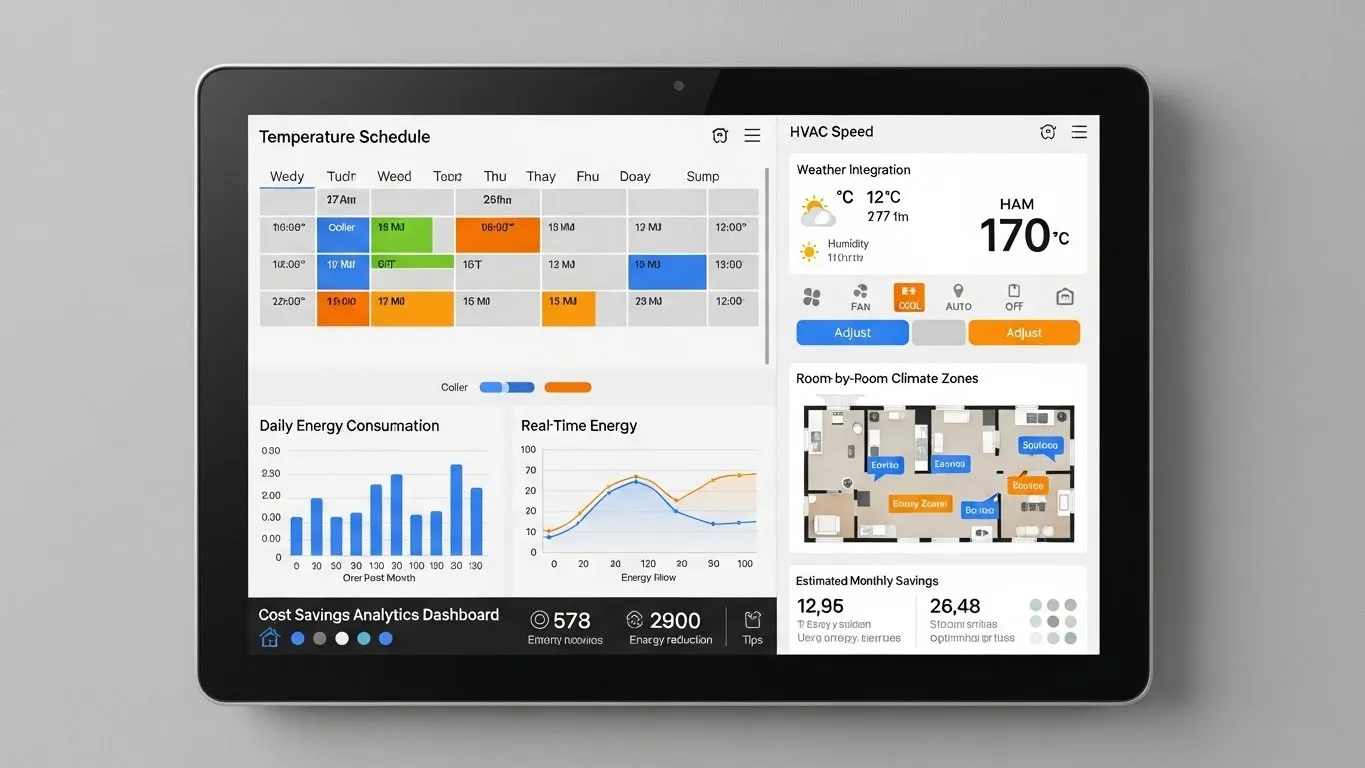
One of the most impactful applications of voice assistant integration is in climate control and energy management. By linking your smart thermostat to your voice assistant, you gain unprecedented control over your home's energy consumption. Imagine saying, "Alexa, set the living room to 72 degrees," or "Hey Google, turn off the AC in the guest room." This level of precision not only enhances comfort but also leads to significant energy savings.
Voice Commands for Efficient Climate Control
Leveraging voice commands for climate control goes beyond simple temperature adjustments. You can create routines that respond to your daily schedule or even your presence.
- "Set the house to eco-mode." This command can trigger a pre-set energy-saving temperature.
- "Increase the temperature by two degrees." Fine-tuning your comfort becomes effortless.
- "What's the temperature in the bedroom?" Get instant feedback without checking an app.
- "Turn on the fan in the kitchen." Integrate other climate-related devices for comprehensive control.
- "Good morning" routines can automatically adjust the thermostat to your preferred wake-up temperature, ensuring a comfortable start to your day while optimizing energy use.
Automating Energy Savings Through Voice Routines
Beyond direct commands, voice assistants excel at automating energy-saving routines. These routines can be triggered by time, presence, or even other smart devices.
- "Leaving Home" Routine: When you say "Alexa, I'm leaving," your voice assistant can turn off lights, lower the thermostat, and arm your security system. This prevents wasted energy when no one is home.
- "Bedtime" Routine: A simple "Hey Google, good night" can dim lights, adjust the bedroom temperature, and ensure all doors are locked. This provides both comfort and peace of mind.
- Integration with occupancy sensors can further refine these routines, ensuring lights and HVAC only operate when a room is occupied. This proactive approach to home climate management is a key differentiator in modern smart homes. According to a 2023 report by the International Energy Agency, smart home technologies, particularly those focused on heating and cooling, have the potential to reduce residential energy consumption by up to 15%.
Advanced Voice Assistant Features for Smart Home Control
Modern voice assistants offer more than just basic commands; they provide advanced features that elevate seamless smart home control to new heights. These capabilities include multi-assistant integration, guest access, and proactive suggestions. Exploring these advanced options can unlock even greater convenience and efficiency.
Multi-Assistant Integration and Interoperability
While choosing a primary voice assistant is common, many users find value in integrating multiple platforms. For instance, you might use Google Assistant for its superior search capabilities and Alexa for its extensive smart home device support.
- Bridging platforms: Devices like Home Assistant or Hubitat can act as central hubs, allowing different voice assistants to control the same devices. This creates a truly unified control experience.
- Matter and Thread: These emerging standards are designed to improve interoperability, allowing devices from different manufacturers to communicate seamlessly, regardless of the voice assistant used. The adoption of Matter, as detailed in a 2025 whitepaper by Tech Insights, is rapidly expanding, promising a future where device compatibility is less of a concern.
Personalizing Your Voice Commands and Routines
Customization is key to maximizing the utility of voice assistant integration. Most platforms allow you to create custom commands and complex routines tailored to your specific needs and preferences.
- Custom Phrases: Instead of "turn on the living room lights," you could set a custom phrase like "brighten up the lounge." This makes commands more natural and intuitive.
- Complex Sequences: A single command like "Movie Night" could dim the lights, close the blinds, turn on the TV, and adjust the sound system. This level of automation provides unparalleled convenience.
- Conditional Routines: Some platforms allow routines based on conditions, such as "If the outdoor temperature is above 80 degrees, turn on the fan." This proactive automation enhances both comfort and energy efficiency.
Troubleshooting and Future-Proofing Your Voice-Controlled Smart Home
Even with the best setup, occasional issues can arise. Understanding common troubleshooting steps and how to future-proof your system ensures long-term, seamless smart home control. Proactive maintenance is vital for a reliable experience.
Common Issues and Quick Fixes
- "Device not responding": Check Wi-Fi connectivity, ensure the device is powered on, and verify its status in the manufacturer's app. Sometimes a simple reboot of the device or router can resolve the issue.
- "Voice assistant doesn't understand": Speak clearly, ensure you're within range, and verify the command syntax. Reviewing your voice assistant's history can help identify misinterpretations.
- Connectivity problems: Ensure your Wi-Fi network is robust and covers all areas of your home. Mesh Wi-Fi systems can significantly improve coverage and stability for numerous smart devices.
- Software updates: Regularly check for and install updates for both your voice assistant devices and your smart home gadgets. Updates often include bug fixes and performance enhancements.
Keeping Your Smart Home System Up-to-Date
The smart home landscape is constantly evolving. Staying current with technology ensures your voice assistant integration remains effective and secure.
- Firmware updates: Regularly update the firmware of your smart devices. These updates often include security patches and new features.
- New standards: Keep an eye on emerging standards like Matter. Devices that support these standards will offer greater compatibility and longevity.
- Expandable subtopics: For more information on this topic, readers can explore related articles on advanced smart home security systems or the impact of AI on home automation. Another area of interest is the detailed comparison of smart home ecosystems for climate control.
FAQ Section
Q1: What are the primary benefits of integrating a voice assistant with my smart home?
Integrating a voice assistant offers unparalleled convenience, allowing you to control various smart devices with simple voice commands. This hands-free operation enhances daily routines, from adjusting lighting and temperature to managing security. It also streamlines complex tasks through custom routines, improving overall home efficiency and comfort. The ability to manage your home intuitively makes smart technology more accessible and user-friendly.
Q2: Can I use multiple voice assistants in my smart home simultaneously?
Yes, it is possible to use multiple voice assistants in your smart home. While one might be your primary, you can often integrate others for specific tasks or device compatibility. Some advanced users employ smart home hubs or platforms like Home Assistant to bridge different ecosystems, allowing devices connected to one assistant to be controlled by another. Emerging standards like Matter are also making multi-assistant interoperability more seamless.
Q3: How does voice assistant integration contribute to energy efficiency in smart homes?
Voice assistant integration significantly boosts energy efficiency by enabling precise and convenient control over climate management and lighting. You can easily adjust thermostats, turn off lights in unoccupied rooms, or activate energy-saving modes with simple voice commands. Furthermore, creating automated routines, such as "Goodnight" or "Away" routines, ensures that energy-consuming devices